Compact tracked cranes that fit through doorways, work indoors, and lift onto rooftops where mobile cranes can't reach. From museum installations to atrium roof equipment — when access is the problem, the spider crane is the answer.
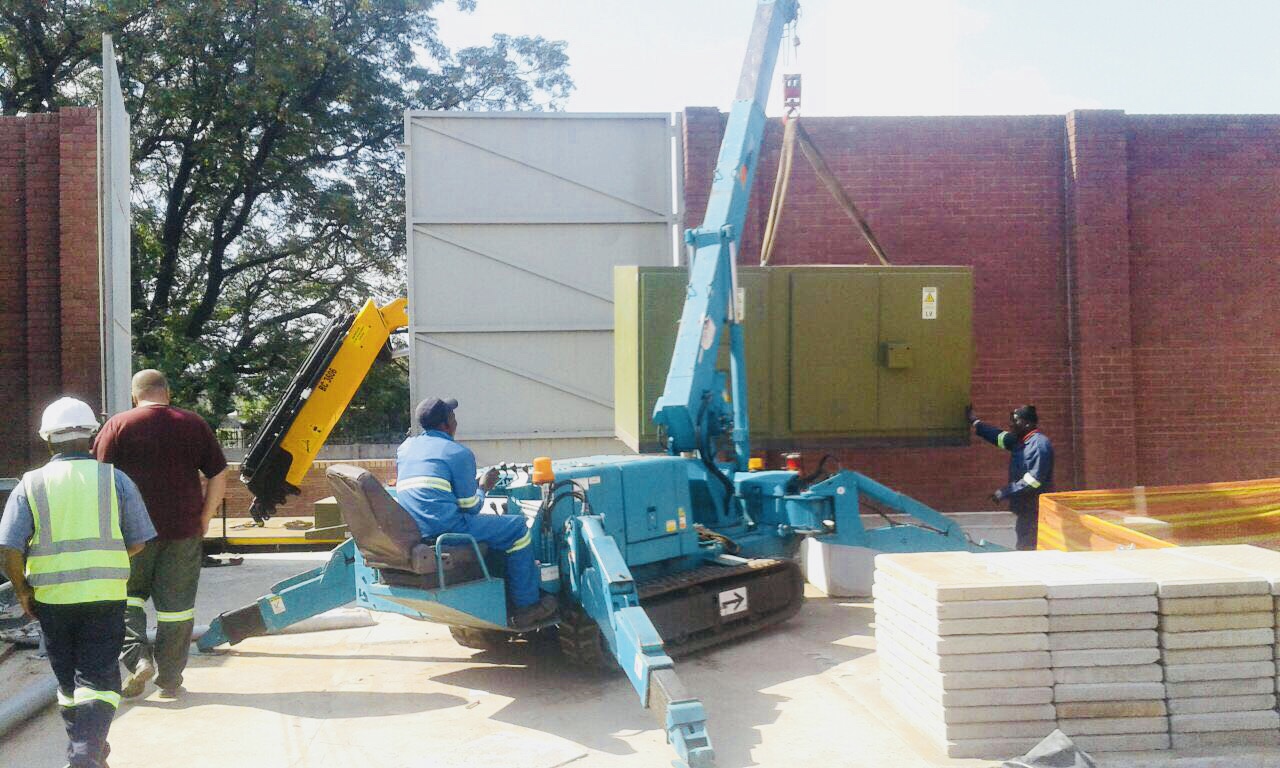
A spider crane is a compact tracked lifting machine — typically 1 to 8 ton capacity — that's small enough to fit through a standard double doorway, light enough to drive across most floor surfaces, and powerful enough to handle most rooftop and indoor lifts. They're the only practical option for jobs where mobile cranes can't get close enough.
Picture a mini boom crane on rubber tracks. Drive it into position. Once on site, four outriggers extend to stabilise the machine. The boom telescopes out and articulates to position the hook. From there it lifts like any conventional crane — just at a scale that fits indoor environments. Most spider cranes have working radii up to 12–15 metres and lift heights to 18 metres.
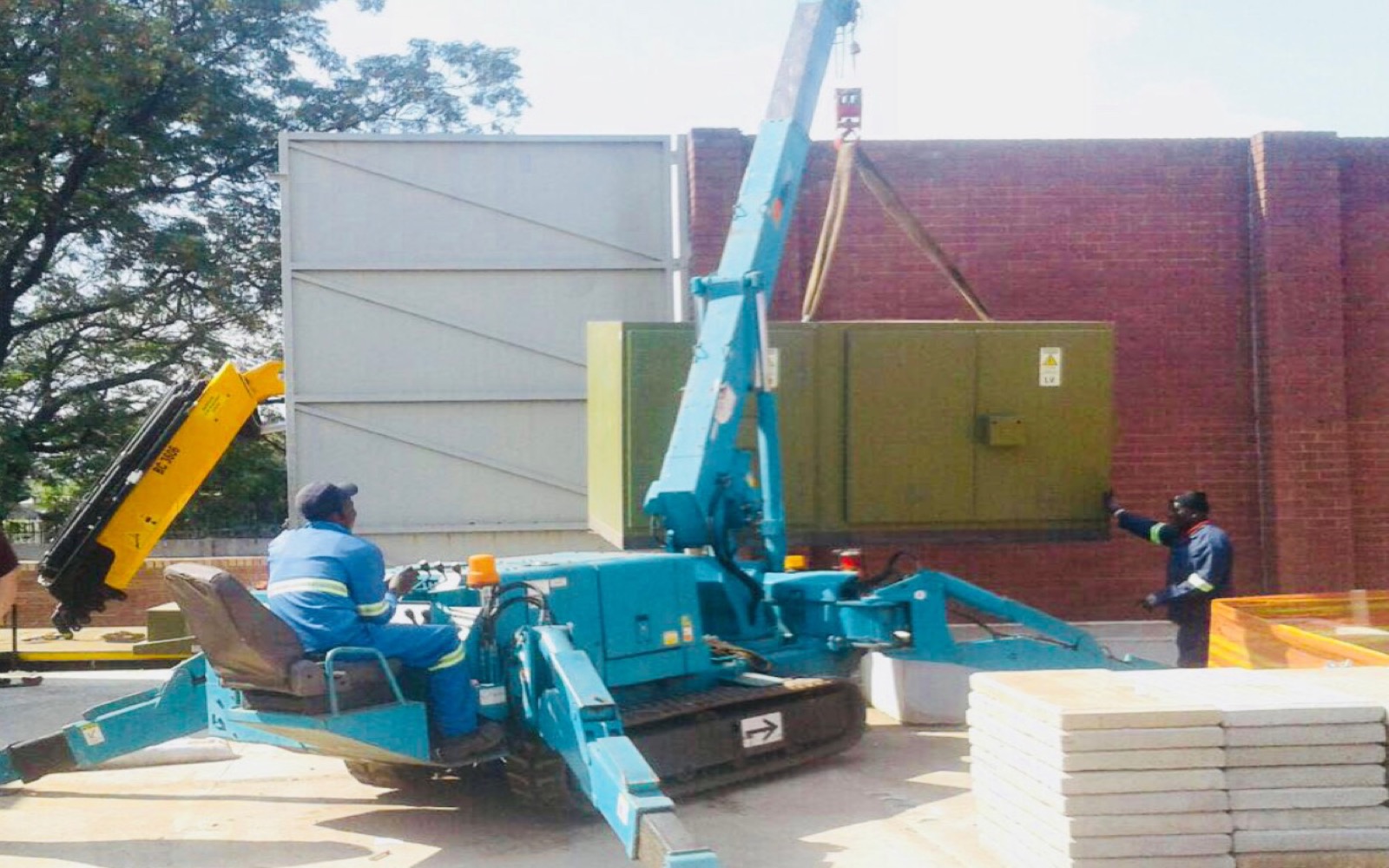
Office buildings with central atriums often have plant rooms in the roof above the atrium. Replacing or installing equipment up there is impossible with a mobile crane (no access through the building) and impractical via roof opening (structural risk). A spider crane drives in through the front doors, sets up in the atrium, and lifts through any small roof opening.
Heritage building floors won't carry mobile crane weight. Doors are narrow. Ceilings are valuable. Spider cranes — particularly the smaller all-electric units — install sculpture, equipment and display cases without damaging the building.
Where a mobile crane's boom can't reach over the building, a spider crane on the roof can. Pre-rigged onto the roof via tower crane during construction, then operated by a single operator for plant-room work, HVAC swaps, comms equipment installation.
Industrial sites with corridor access between buildings, plant rooms accessible only through workshop floors, basement equipment swaps. Anywhere a 7m-wide mobile crane simply can't fit.
Spider cranes come in diesel, electric, and hybrid (diesel-electric) configurations. For indoor work, electric is essential — no exhaust emissions, low noise, no fuel handling near retail/office occupants. We hire both diesel and electric variants — tell us where the lift is and we'll spec the right power source.
Tell us the access, the load, and where it needs to go. We'll spec the right machine.